
London, UK—The man known to the British Sikh diaspora as a passionate advocate for environmental justice and social reform in Punjab now bears a chilling new title: suspected terrorist financier.
On December 4, 2025, the UK government’s most decisive counter-terrorism tool quietly slammed down on the life and work of Gurpreet Singh Rehal. HM Treasury announced it had sanctioned Rehal and an organization associated with him, Babbar Akali Lehar (BAL), under its Domestic Counter-Terrorism Regime. The action resulted in an immediate asset freeze and a director disqualification, effectively cutting him off from the UK’s financial system and his professional life.
This is not a typical criminal charge, but an executive action based on “reasonable grounds to suspect” that Rehal is involved in the activities of Babbar Khalsa International (BKI) — a proscribed pro-Khalistan militant group — including recruitment, promotion, and the purchasing of weapons and military material.
But the story of Gurpreet Singh Rehal is defined by a stark, unsettling contradiction.
To the public, Rehal was the voice behind Saving Panjab, an initiative focused on humanitarian crises: the devastating water table depletion, the rampant drug epidemic, and the mass youth migration gripping the Indian state. His talks and podcasts were rallying cries for diaspora involvement in community issues, drawing applause for mobilizing support for a troubled homeland. His public profile even included a consultancy role with Panjab Warriors, a consortium that recently completed a high-profile takeover of Morecambe FC, a testament to his rising stature in British business.
Yet, the Treasury’s designation paints an entirely different, clandestine picture — one of a shadow figure financing a proscribed group known for its history of violence and separatist goals.
The sanctions are a political and legal landmark, marking the first use of the Domestic Counter-Terrorism Regime to specifically target funding for a pro-Khalistan militant group like BKI. This move is widely seen as a major step in the UK’s cooperation with India on security matters.
Executive Justice: Punishment Without a Verdict
The controversy doesn’t just lie in the allegations; it lies in the process itself.
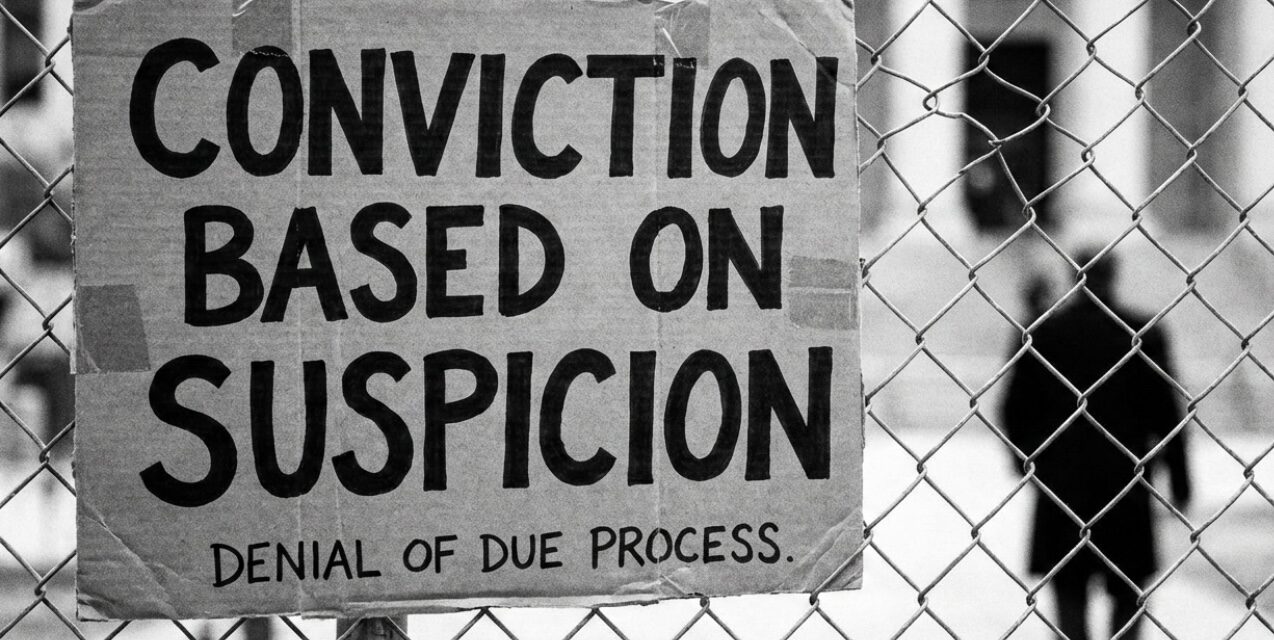
The use of the sanctions regime, authorized under the Counter-Terrorism (Sanctions) (EU Exit) Regulations 2019, is powerful precisely because it is swift and avoids the courtroom. It relies on intelligence that does not have to meet the standard of “beyond a reasonable doubt” required for a criminal conviction by the Crown Prosecution Service (CPS).
For civil liberties groups, this represents a dangerous erosion of due process. Critics argue that the government has delivered a crushing, life-altering punishment, freezing all funds, including those of his organizations like Saving Panjab CIC without giving Rehal the fundamental right to face the evidence against him in a transparent, adversarial legal setting.
“To ruin a man’s reputation and livelihood based on suspicion, while denying him the chance to defend himself in open court, is effectively an act of executive conviction,” stated one prominent barrister familiar with sanctions law.
The case instantly highlights the logical fallacy of the Red Herring in the public discourse. Rehal’s advocates point to his humanitarian work to argue for his innocence, but the government’s case centers on specific, alleged financial support for BKI. The two are not mutually exclusive. Conversely, the government’s emphasis on the “terrorism” label serves as a powerful distraction, discouraging public scrutiny of the intelligence that underpins the sanction.
The Chilling Effect on the Diaspora
The collateral damage extends beyond Rehal. The sanctions on Saving Panjab CIC send a clear message to the broader British Sikh community, many of whom hold legitimate concerns about the state of Punjab.
“The freezing of a company dedicated to clean water and fighting drug abuse is an unacceptable chilling effect,” one diaspora leader noted. “It suggests that if you engage in advocacy for your homeland, even on non-political social issues, you risk being drawn into the orbit of counter-terrorism measures.”
As Gurpreet Singh Rehal prepares for what is likely to be a protracted legal battle to challenge the sanctions in an administrative review, a process notoriously difficult to win, the UK faces tough questions. Has it sacrificed the principles of open justice for the expediency of counter-terrorism? And what price will the democratic right to dissent and community activism pay for this unprecedented use of executive power?
The landmark sanction against Rehal may have secured the UK’s financial system against an individual identified as a person of interest in national security investigations, but it has simultaneously cast a long, cold shadow over the freedom of advocacy for an entire community.


